Lately, I've gotten a LOT of requests for book suggestions from friends. Most of them have children between 3rd and 5th grade and have read a lot of the recently released books. Suggesting new books wasn't going to cut it with these kids. So instead, I went back in time. I looked to more obscure, forgotten classics, but also the books I read and loved as a kid (in the 80s!). I couldn't resist throwing in a few of my contemporary favorites, just in case they had somehow missed out on them. Also included is a list of classics that are still popular.
In no particular order...:
Oldies but Goodies
Tom's Midnight Garden by Philippa Pearce. Tom discovers a garden that only exists when the clock strikes thirteen.
Her Majesty, Grace Jones and The Boyhood of Grace Jones by Jane Langton. A girl uses her imagination to survive the Depression.
Mandy by Julie Andrews Edwards (yes, THAT Julie Andrews) (but please read The Secret Garden first!). An orphan girl makes a deserted cottage in the woods her private hideaway and finds peace, beauty, and friendship in nature.
The Last of the Really Great Whangdoodles by Julie Andrews Edwards. An adventure reminscent of The Phantom Tollbooth.
The Enormous Egg by Oliver Butterworth. Exactly what it sounds like!
Black and Blue Magic by Zilpha Keatley Snyder. Harry Houdini Marco is given the gift of flight and in turn gives the gift of believing in the impossible to others. See my discussion of it here.
The Saturdays and sequels by Elizabeth Enright. Four motherless children alternate having adventures in old New York on Saturdays.
The "Shoes" books by Noel Streatfeild (Ballet Shoes is the best). British orphans need to make their living on the stage.
Understood Betsy by Dorothy Canfield Fisher. A pampered orphaned city girl moves to live with family in the country and learns to - and that she can - take care of herself.
Daddy Long-Legs by Jean Webster. In this epistolary novel, an orphan writes letters to her mysterious benefactor.
Anna to the Infinite Power by Mildred Ames. Super-creepy book about a girl who doesn't know she's one of thousands of identical clones.
The Girl With Silver Eyes by Willo Davis Roberts. A girl discovers she has the power of telekinesis.
The Anastasia books by Lois Lowry. Laugh-out-loud funny.
In the Year of the Boar and Jackie Robinson by Bette Bao Lord. A Chinese immigrant girl finds that falling in love with baseball and the Brooklyn Dodgers is her route to becoming an American. Very funny, to boot.
For slightly older children
Across Five Aprils by Irene Hunt. Historical fiction about the Civil War.
Dicey's Song and sequels by Cynthia Voigt. A raw, poignant, heartbreaking story of abandoned siblings.
The Alice books by Phyllis Reynolds Naylor. A motherless girl copes with growing up.
When Hitler Stole Pink Rabbit by Judith Kerr. Anna and her German Jewish family flee their home as the Nazis come to power.
Some more recent favorites
The Evolution of Calpurnia Tate. Calpurnia Tate defies her mother's wishes that she be a proper young lady and instead pursues her love of science, guided by her grandfather.
The Fourteenth Goldfish by Jennifer Holm. Another wonderful grandfather-granddaughter scientist story.
Our Only May Amelia and The Trouble With May Amelia by Jennifer Holm. Completely different from The Fourteenth Goldfish, these books tell the story of a pioneer girl in Washington in 1899.
Where the Mountain Meets the Moon and Starry River of the Sky by Grace Lin. Beautifully written books in which the protagonists go on a journey (physical and spiritual) only to find that what they seek has been at home all along. With Chinese folktales embedded in the books, the complicated plot structures make these great read-alouds.
The Castle Corona by Sharon Creech. Neither the peasants nor the royals in this seeking story are fully satisfied.
A Mango-Shaped Space by Wendy Mass. The story of a girl with synesthesia.
Project Mulberry by Linda Sue Park. This book, about a Korean-American girl and her male friend who decide to enter a project about growing silkworms in the state fair is really about racism, ethnic identiy, assimilation, what it means to be an American, sustainable farming, and novel-writing itself.
Keeping Score by Linda Sue Park. Another story of a girl who loves baseball. But the subplot of a local soldier who comes home from the Korean War with PTSD makes this a story for older readers.
Twerp and Finding the Worm by Mark Goldblatt. These coming-of-age in 1960s Queens are based on the author's own life and deal with issues big and small, including friendship and religion. A tragedy in the second book may make this more appropriate for older children.
The Magic Half by Annie Barrows and Seven Stories Up by Laurel Snyder. Time travel and sibling relationships make for fun books. Read more about them here.
Breathing Room by Marsha Hayles. A historical novel set in a tuberculosis sanitorium against the backdrop of World War II.
Out of My Mind by Sharon Draper. A tear-jerker about a brilliant girl unable to talk because of cerebral palsy and what happens when she finally becomes able to communicate.
And just in case you missed these classics (horrors!):
The Mixed-Up Files of Mrs. Basil E. Frankweiler by E.L. Konigsburg. Claudia and her brother James run away to the Metropolitan Museum of Art and become intrigued by the a mystery regarding the provenance of a sculpture.
A Wrinkle in Time by Madeleine L'Engle. Tessering, good versus evil, and smart women scientists make a great trifecta.
Heidi by Johanna Spyri. An orphan is taken care of by her hermit grandfather and finds peace, beauty, and friendship in nature.
The Secret Garden by Frances Hodgson Burnett. An orphan has to live with a distant relative and finds peace, beauty, and friendship in nature. Sound familiar? I strongly recommend reading this one out loud due to the Cockney-accented English of some of the characters.
A Little Princess by Frances Hodgson Burnett. A pampered child who suddenly experiences a turn of fortune draws on her inner strength to survive.
Tuck Everlasting by Natalie Babbit. Would it really be good to live forever?
Bridge to Terabithia by Katherine Paterson. Classic tearjerker.
The Westing Game by Ellen Raskin. A puzzle of a book.
The Phantom Tollbooth by Norton Juster. Word play and math concepts galore.
The Witch of Blackbird Pond by Elizabeth George Speare. Historical fiction about the Salem witch trials.
Julie of the Wolves by Jean Craighead George. Classic survival story.
Island of the Blue Dolphins by Scott O'Dell. Another survival story.
Caddie Woodlawn by Carol Rylie Brink. Caddie does not want to be a proper young lady in 1864 Wisconsin.
Please tell me if this list is helpful! Which of these do you remember reading as a child? What did I leave out?
Wednesday, November 11, 2015

Sunday, November 8, 2015
The Joy and Frustration of Empty Shelves
Purchasing books for the school library is an exercise in balancing the constraints of money, space, and mission (to educate? to entertain?) with the students' requests for certain books and the popularity (possibly short-lived) of certain series.

When I see empty shelves because all the books have been checked out, I am thrilled that we have books that the kids love, and I regret I don't - can't - have more of them. The Wimpy Kid shelf is perpetually empty, as are the shelves designated for other popular series, such as Captain Underpants and Big Nate, as well as the graphic novel shelf. I have four copies of Smile and it is rarely back in the library for more than a few minutes. I encourage the children, particularly the ones who I know have regular access to the public library, to seek them out there, but you know kids. It's all about immediate gratification.
We don't have more than four copies of any book. Our school has 600 students and the library can't consist just of Wimpy Kid and books by Raina Telgemeier, much as the students might wish it did! (Oh, and Minecraft - which the children always request and of which we have none. Because I refuse to have video-game or television or movie based books in the school library.) With some of these series consisting of 10 books or more, if I had four copies of each one... well, you see the problem. And what happens in a few years, if Wimpy Kid et al. is no longer popular?
However, because of the way we schedule library time, the first class to grab those Wimpy Kid books keeps getting them. They come on the first Monday of the year, take them out, and then every time they return them, they circulate to other children in the same class. Thursday classes are out of luck. We need a new system.
One idea I've proposed is that that every time a Wimpy Kid or other similarly popular book is returned, we should not let it immediately recirculate. We should hold it until the next class comes in, or even until the next day. As a matter of policy - and simplicity - we don't allow holds on books.
How many copies of popular books do you have at your/your child's school library? How do you make sure as many children as possible have access to them?
Photos of the books I DID purchase to follow in a later post!

When I see empty shelves because all the books have been checked out, I am thrilled that we have books that the kids love, and I regret I don't - can't - have more of them. The Wimpy Kid shelf is perpetually empty, as are the shelves designated for other popular series, such as Captain Underpants and Big Nate, as well as the graphic novel shelf. I have four copies of Smile and it is rarely back in the library for more than a few minutes. I encourage the children, particularly the ones who I know have regular access to the public library, to seek them out there, but you know kids. It's all about immediate gratification.
 |
| A rare sighting of TWO Wimpy Kid books on the shelf! |
However, because of the way we schedule library time, the first class to grab those Wimpy Kid books keeps getting them. They come on the first Monday of the year, take them out, and then every time they return them, they circulate to other children in the same class. Thursday classes are out of luck. We need a new system.
One idea I've proposed is that that every time a Wimpy Kid or other similarly popular book is returned, we should not let it immediately recirculate. We should hold it until the next class comes in, or even until the next day. As a matter of policy - and simplicity - we don't allow holds on books.
How many copies of popular books do you have at your/your child's school library? How do you make sure as many children as possible have access to them?
Photos of the books I DID purchase to follow in a later post!
Monday, November 2, 2015
Let's Go On A Treasure Hunt!
Let's go on a treasure hunt! What are we hunting? Words! And where are we hunting for them? In books!

In an effort to bring back dictionary usage, I wracked my brain for something that would make vocabulary fun. I'm not sure this will work, but I figured it was worth a try. I picked 10 difficult words and students will get points for: (1) finding the words in books they are reading; (2) guessing the meaning from context; (3) looking the definition up in the dictionary; (4) identifying the word's part of speech; (5) listing synonyms and antonyms of the word. May the best reader win!

In an effort to bring back dictionary usage, I wracked my brain for something that would make vocabulary fun. I'm not sure this will work, but I figured it was worth a try. I picked 10 difficult words and students will get points for: (1) finding the words in books they are reading; (2) guessing the meaning from context; (3) looking the definition up in the dictionary; (4) identifying the word's part of speech; (5) listing synonyms and antonyms of the word. May the best reader win!
Thursday, October 15, 2015
What Wouldn't You Want to Live Without?
What wouldn't you want to live without?

Chocolate? Google? Pictures? Snuggling? Cheese? Those were some of the answers our students and parents gave when we asked them that question.
 Last spring I purchased 40+ books in the You Wouldn't Want to... series (You Wouldn't Want to Live Without... Electricity/ Books/ Fire; You Wouldn't Want to Be A... Suffragist/ An Aztec Sacrifice; you get the idea!) for the school library. I knew they would be popular once they made it onto the shelves this fall, but I still wanted to draw the students' attention to this new collection. I left out slips of paper asking what they couldn't live without and tons of children (and a few parents) filled them out and, as expected, the books have proved popular.
 These books are not the type of nonfiction I usually like. I find a lot of today's nonfiction too busy (I did not grow up with all the screens and video games that get today's kids used to seeing lots of graphics and scattered information on each page). And while I think there is a place for nonfiction that provides snippets of information, I think they have to be supplemented if students want to delve more deeply into a topic. Finally, these books feel a bit gimmicky to me - they make everything about history gross, horrific and negative.
Despite myself, I do like these books. I find they go more in depth than others of this type. They are less busy than, say, the Magic School Bus books, which I find dizzying. The topics are interesting. When you think of things you wouldn't want to live without, clean water and toilets come to mind, and are covered by entries in this series, but you probably wouldn't think of things that you think you would want to live without, like insects, or extreme weather, which also are covered here. Similarly, being a suffragist or a samurai or a gladiator might sound really cool... until you read these books.
So, what wouldn't you want to live without?

Chocolate? Google? Pictures? Snuggling? Cheese? Those were some of the answers our students and parents gave when we asked them that question.
  |
| Zombies scary stuf! [sic] |
 Last spring I purchased 40+ books in the You Wouldn't Want to... series (You Wouldn't Want to Live Without... Electricity/ Books/ Fire; You Wouldn't Want to Be A... Suffragist/ An Aztec Sacrifice; you get the idea!) for the school library. I knew they would be popular once they made it onto the shelves this fall, but I still wanted to draw the students' attention to this new collection. I left out slips of paper asking what they couldn't live without and tons of children (and a few parents) filled them out and, as expected, the books have proved popular.
 These books are not the type of nonfiction I usually like. I find a lot of today's nonfiction too busy (I did not grow up with all the screens and video games that get today's kids used to seeing lots of graphics and scattered information on each page). And while I think there is a place for nonfiction that provides snippets of information, I think they have to be supplemented if students want to delve more deeply into a topic. Finally, these books feel a bit gimmicky to me - they make everything about history gross, horrific and negative.
 |
| Star Wars |
Despite myself, I do like these books. I find they go more in depth than others of this type. They are less busy than, say, the Magic School Bus books, which I find dizzying. The topics are interesting. When you think of things you wouldn't want to live without, clean water and toilets come to mind, and are covered by entries in this series, but you probably wouldn't think of things that you think you would want to live without, like insects, or extreme weather, which also are covered here. Similarly, being a suffragist or a samurai or a gladiator might sound really cool... until you read these books.
So, what wouldn't you want to live without?
Tuesday, September 29, 2015
My Apartment Complex
Do you remember those TV ads for the Publishers Clearinghouse sweepstakes? You know, the ones where they knock on someone's door and tell them they've won $25,000? Well, every time my sister and I saw one of those, we had the same reaction: Why doesn't anyone who lives in an apartment ever win?
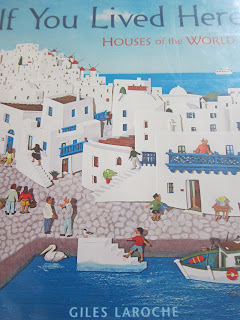 I have the same question about children's books. Where are the apartment buildings? Perhaps, as a lifelong apartment-dweller myself, I am oversensitive and thus exaggerating their scarcity. Sure, there are some books - some pretty famous ones, at that - featuring apartment dwellers: When You Reach Me, Liar and Spy, and Goodbye Stranger, all by Rebecca Stead, the Riverside Kids books (these really get at the heart of apartment living, with unpleasant interactions in the elevator, a building-wide party, and Nora's imagining all 200 residents brushing their teeth at the same time!), the Clementine series, and the Fudge books (except for the year the Hatcher family decamps for New Jersey). The characters in Mark Goldblatt's Twerp and its sequel, Finding the Worm, live in apartment buildings in Queens. Harriet the Spy is a city dweller, but her wealthy family lives in a house, as do the Primms of Lyle the Crocodile books. Ditto for the Melendy Quartet. Some older books, especially those that feature immigrants, are set in (small) apartment buildings such as All-of-a-Kind Family series and In the Year of the Boar and Jackie Robinson. But modern, apartment dwelling kids? They seem to be few and far between.
As for picture books, such depictions seem even more rare. Amy Schwartz's A Glorious Day portrays the daily activities of the residents of a low-scale Brooklyn apartment building. What Happens on Wednesdays, Nana in the City (where a boy becomes reconciled to his grandma living in the city, but still doesn't want to live there himself!), the books of Ezra Jack Keats, Gina, a little known out-of-print gem by Bernard Waber about a tomboy who lives in Queens also come to mind. (Speaking of which, the latter, Mark Goldblatt's books, and How Pizza Came to Queens are the only children's books I have found set in Queens.) Some others, like Tar Beach, feature apartment dwellers, but that fact plays little to no role in the story.
 Even non-fiction books that take as their subject matter homes seem to equate homes with houses, not apartments. In Carson Ellis's otherwise lovely Home, apartments get barely a glancing mention. In If You Lived Here (which admittedly does have the subtitle Houses of the World), there is nary an apartment to be found, although there are other types of multiple dwellings mentioned, such as the tulou of China. And in Cynthia Rylant's Let's Go Home: The Wonderful Things About a House (emphasis added), of course only addresses the components of houses (including a ridiculously big bathroom). A search did uncover Apartment Book, but I can't think of any other books about apartments and/or apartment buildings. Not (only) how they are built, not their architecture or engineering, but how they function as homes.
What children's fiction can you think of where the protagonist lives in an apartment? Is there non-fiction about apartment buildings that I've missed?
Is it me, or do way more children's book protagonists live in houses than apartments?
 I have the same question about children's books. Where are the apartment buildings? Perhaps, as a lifelong apartment-dweller myself, I am oversensitive and thus exaggerating their scarcity. Sure, there are some books - some pretty famous ones, at that - featuring apartment dwellers: When You Reach Me, Liar and Spy, and Goodbye Stranger, all by Rebecca Stead, the Riverside Kids books (these really get at the heart of apartment living, with unpleasant interactions in the elevator, a building-wide party, and Nora's imagining all 200 residents brushing their teeth at the same time!), the Clementine series, and the Fudge books (except for the year the Hatcher family decamps for New Jersey). The characters in Mark Goldblatt's Twerp and its sequel, Finding the Worm, live in apartment buildings in Queens. Harriet the Spy is a city dweller, but her wealthy family lives in a house, as do the Primms of Lyle the Crocodile books. Ditto for the Melendy Quartet. Some older books, especially those that feature immigrants, are set in (small) apartment buildings such as All-of-a-Kind Family series and In the Year of the Boar and Jackie Robinson. But modern, apartment dwelling kids? They seem to be few and far between.
As for picture books, such depictions seem even more rare. Amy Schwartz's A Glorious Day portrays the daily activities of the residents of a low-scale Brooklyn apartment building. What Happens on Wednesdays, Nana in the City (where a boy becomes reconciled to his grandma living in the city, but still doesn't want to live there himself!), the books of Ezra Jack Keats, Gina, a little known out-of-print gem by Bernard Waber about a tomboy who lives in Queens also come to mind. (Speaking of which, the latter, Mark Goldblatt's books, and How Pizza Came to Queens are the only children's books I have found set in Queens.) Some others, like Tar Beach, feature apartment dwellers, but that fact plays little to no role in the story.
 Even non-fiction books that take as their subject matter homes seem to equate homes with houses, not apartments. In Carson Ellis's otherwise lovely Home, apartments get barely a glancing mention. In If You Lived Here (which admittedly does have the subtitle Houses of the World), there is nary an apartment to be found, although there are other types of multiple dwellings mentioned, such as the tulou of China. And in Cynthia Rylant's Let's Go Home: The Wonderful Things About a House (emphasis added), of course only addresses the components of houses (including a ridiculously big bathroom). A search did uncover Apartment Book, but I can't think of any other books about apartments and/or apartment buildings. Not (only) how they are built, not their architecture or engineering, but how they function as homes.
What children's fiction can you think of where the protagonist lives in an apartment? Is there non-fiction about apartment buildings that I've missed?
Is it me, or do way more children's book protagonists live in houses than apartments?
Friday, June 19, 2015
Zeroteenth Birthday Book Quiz, Part 3!
The third, and final, part of our quiz! Scroll down for the answers. Part 1 can be found here and Part 2 can be found here.
Bonus question: What book does the word "zeroteen" come from?
a. Ramona's World
b. Anastasia, Ask Your Analyst
c. Completely Clementine
d. Smile
Answers: 1. c, 2. a, 3. b, 4.c, 5, b, 6. a, 7. c, 8. a, 9. b, 10. a
Bonus: a.
How did you do?
1. Which
of the following is an epistolary novel?
a. Where
the Mountain Meets the Moon
b. Heidi
c. Daddy
Long-Legs
d. In
the Year of the Boar and Jackie Robinson
2. In
Sisters, Raina is afraid of:
a. Snakes
b. Spiders
c. Cockroaches
d. Dogs
3. In
Half Magic, the children must hold what when they make their wish?
a. A
magic wand
b. A
coin
c. A
letter
d. A
key
4. In
The Mixed-Up Files of Mrs. Basil E. Frankweiler, Jamie cheats at which
card game?
a. Poker
b. Crazy
Eights
c. War
d. Spit
5. In
The Pain and the Great One, both children think:
a. The
other is keeping a secret from him/her
b. Their
parents love the other one best
c. The
other is smarter than him/her
d. The
other is actually adopted
6. Eloise
lives in which New York hotel?
a. The
Plaza
b. The
Waldorf Astoria
c. The
Soho Grand
d. The
Chelsea Hotel
7. Little
Women is set during which war?
a. The
Revolutionary War
b. The
War of 1812
c. The
Civil War
d. The
Spanish-American War
8. The
last book in the Anne of Green Gables series AND the 4th and
5th books of the All-of-a- Kind Family series take place
during which war?
a. World
War I
b. The
Vietnam War
c. The
Korean War
d. World
War II
9. In which TWO books, is someone cured of
paralysis and can walk again?
a. The
Secret Garden and A Little Princess
b. Heidi
and The Secret Garden
c. Rebecca
of Sunnybrook Farm and A Little Princess
d. Rebecca
of Sunnybrook Farm and Heidi
10. In
The Mixed-Up Files of Mrs. Basil E. Frankweiler, Claudia and Jamie try
to figure out the provenance of what kind of artwork?
a. A
sculpture
b. A
painting
c. A
photograph
d. A
collage
Bonus question: What book does the word "zeroteen" come from?
a. Ramona's World
b. Anastasia, Ask Your Analyst
c. Completely Clementine
d. Smile
Answers: 1. c, 2. a, 3. b, 4.c, 5, b, 6. a, 7. c, 8. a, 9. b, 10. a
Bonus: a.
How did you do?
Wednesday, June 17, 2015
Zeroteenth Birthday Book Quiz! (Part 2)
And here is part 2... Scroll to the bottom for the answers. Part 1 can be found here, and part 3 here.
Answers: 1. b, 2. d, 3. b, 4. b, 5. a, 6. d, 7. a, 8. c, 9. d, 10. b.
 |
| Birthday girl with one of her birthday books |
1. Where
does Frances run away to in A Baby Sister for Frances?
a. Under
the sink
b. Under
the table
c. The
backyard
d. The
hall closet
2. What
category of names does Clementine call her brother?
a. Fruit
names
b. Flower
names
c. Descriptive
names (e.g. Patience, Charity)
d. Vegetable
names
3. Back
in China, Shirley Temple Wong was known as:
a. Rascal
b. Bandit
c. Smuggler
d. Wrangler
4. Which
of the following is a girl?
a. Sal
in When You Reach Me
b. George
in Nancy Drew
c. Georges
in Liar and Spy
d. Laurie
in Little Women
5. Which
of the following children do NOT cut or dye their own or someone else’s hair?
a. Anastasia
Krupnik
b. Elisa
and Russell Michaels
c. Betsy,
Tacy, and Tib
d. Anne
of Green Gables
6. In
Breathing Room, the main character is ill with:
a. Pneumonia
b. Bronchitis
c. Whooping
cough
d. Tuberculosis
7. In
Out of My Mind, the main character can’t speak because:
a. She
has cerebral palsy
b. She
was hit by lightening
c. She
is deaf and only communicates in sign language
d. She
doesn’t want to
8. In
Tales of a Fourth Grade Nothing, Fudge swallows:
a. A
goldfish
b. A
quarter
c. A
turtle
d. Dog
food
9. Sheila
Tubman is NOT afraid of:
a. Dogs
b. Lightning
c. Swimming
d. Heights
10. In
The Secret Garden, Mary moves to England from:
a. Australia
b. India
c. Canada
d. South
Africa
Answers: 1. b, 2. d, 3. b, 4. b, 5. a, 6. d, 7. a, 8. c, 9. d, 10. b.
Subscribe to:
Posts (Atom)